
Indonesia–Swiss Launch RESD Phase 2: A Strategic Partnership to Build a Skilled Workforce for the Renewable Energy Industry
This publication is authored by and reflects the views and opinions of Renewable Energy Skills Development (RESD) Project. More information about Renewable Energy Skills Development (RESD), please visit Renewable Energy Skills Development (RESD) Project - Renewable Energy Indonesia
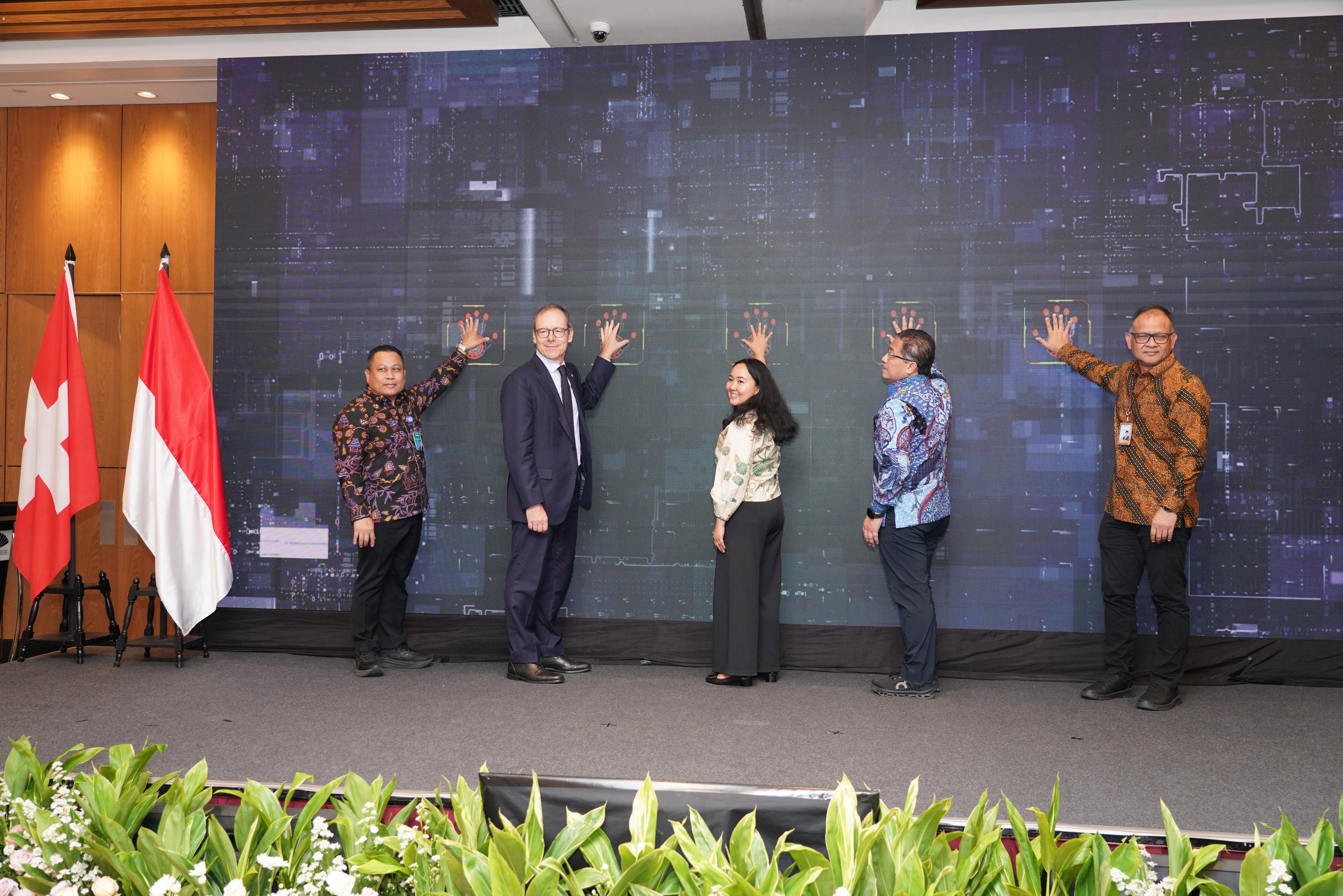
Jakarta, 21 January 2026 – To support Indonesia’s Net Zero Emission 2060 target and accelerate the national energy transition, the Governments of Indonesia and Switzerland have reaffirmed their joint commitment to strengthening human resources in the renewable energy sector through the launch of Renewable Energy Skills Development (RESD) Phase 2.
The program follows a cooperation agreement signed on 2 October 2025 between the Energy and Mineral Resources Human Resources Development Agency (BPSDM ESDM) and the Swiss Government through the State Secretariat for Economic Affairs SECO, witnessed by Vice President of Switzerland and Federal Councillor Guy Parmelin, Vice Minister of Energy and Mineral Resources Yuliot, and Vice Minister of Higher Education, Science, and Technology Stella Christie.
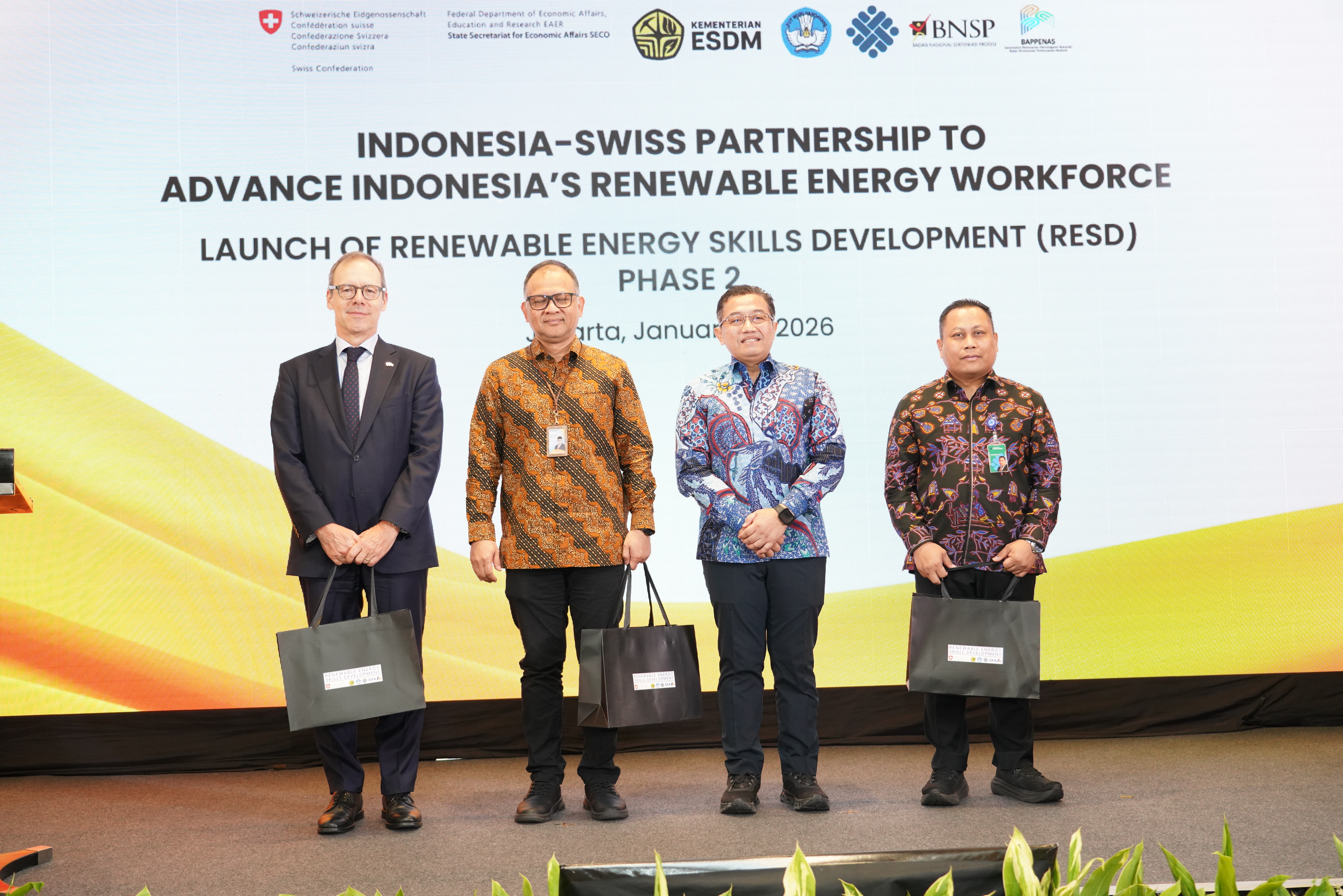
RESD Phase 2 (October 2025–December 2028) builds on the achievements of Phase 1, implemented from December 2020 to July 2025. During the first phase, the program graduated 450 applied bachelor students specializing in renewable energy, trained 386 certified solar PV and micro-hydro technicians across nine provinces, strengthened the capacity of 214 lecturers and instructors at 10 polytechnics and training centers, established more than 100 industry partnerships, and achieved an 80 percent graduate employment rate.
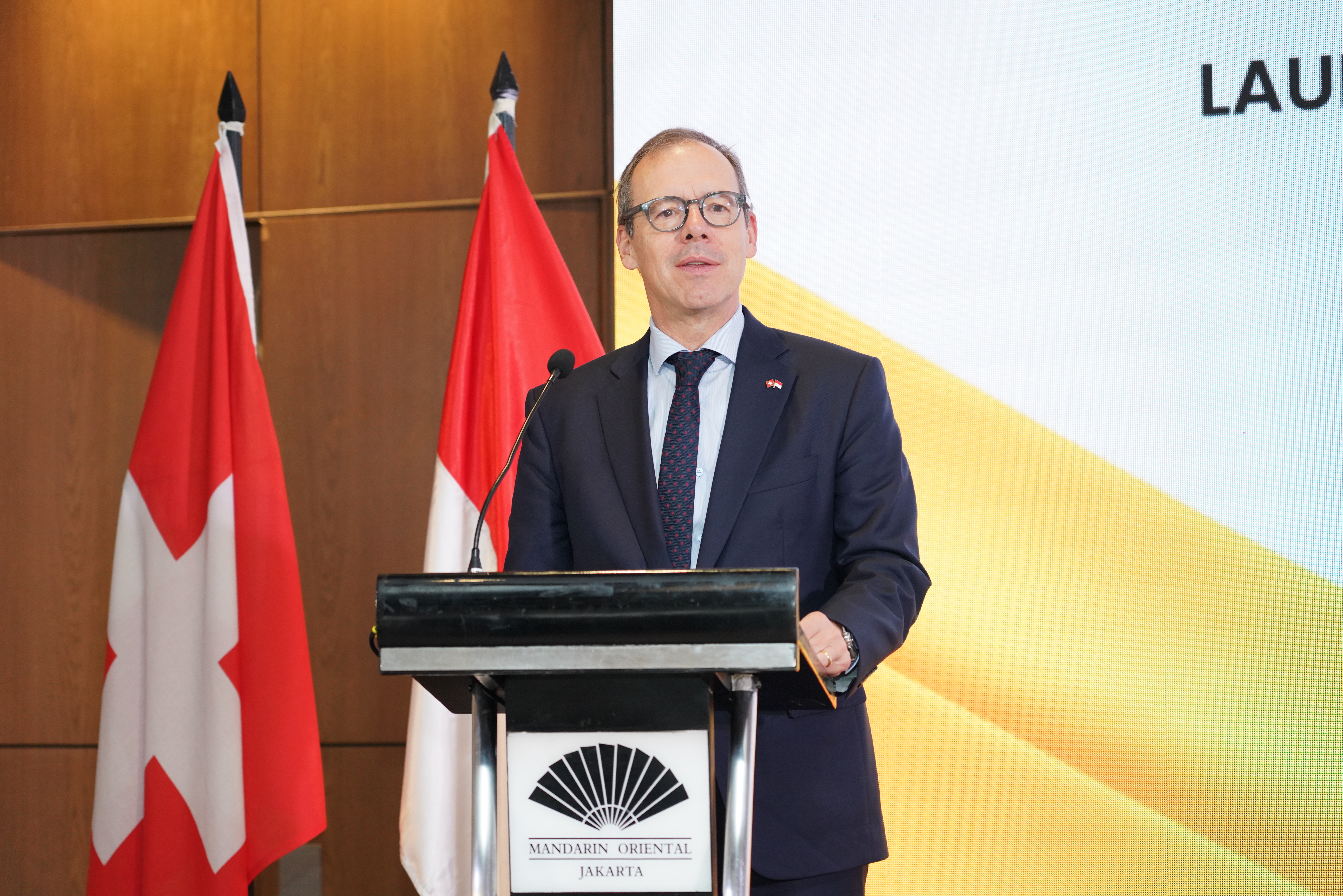
At the launch event in Jakarta, Swiss Ambassador to Indonesia, Timor-Leste, and ASEAN Olivier Zehnder emphasized that Switzerland and Indonesia share the belief that a skilled and job-ready workforce is a critical foundation for the energy transition. He noted that RESD helps address the growing demand for qualified renewable energy professionals through joint investment in human capital toward Net Zero Emission 2060.
Echoing this view, Head of the Energy and Mineral Resources Human Resources Development Agency, Ministry of Energy and Mineral Resources, Prahoro Nurtjahyo, highlighted that Indonesia’s vast renewable energy potential can only be realized through strong human resource capacity, supported by policies that reinforce educational and vocational institutions.
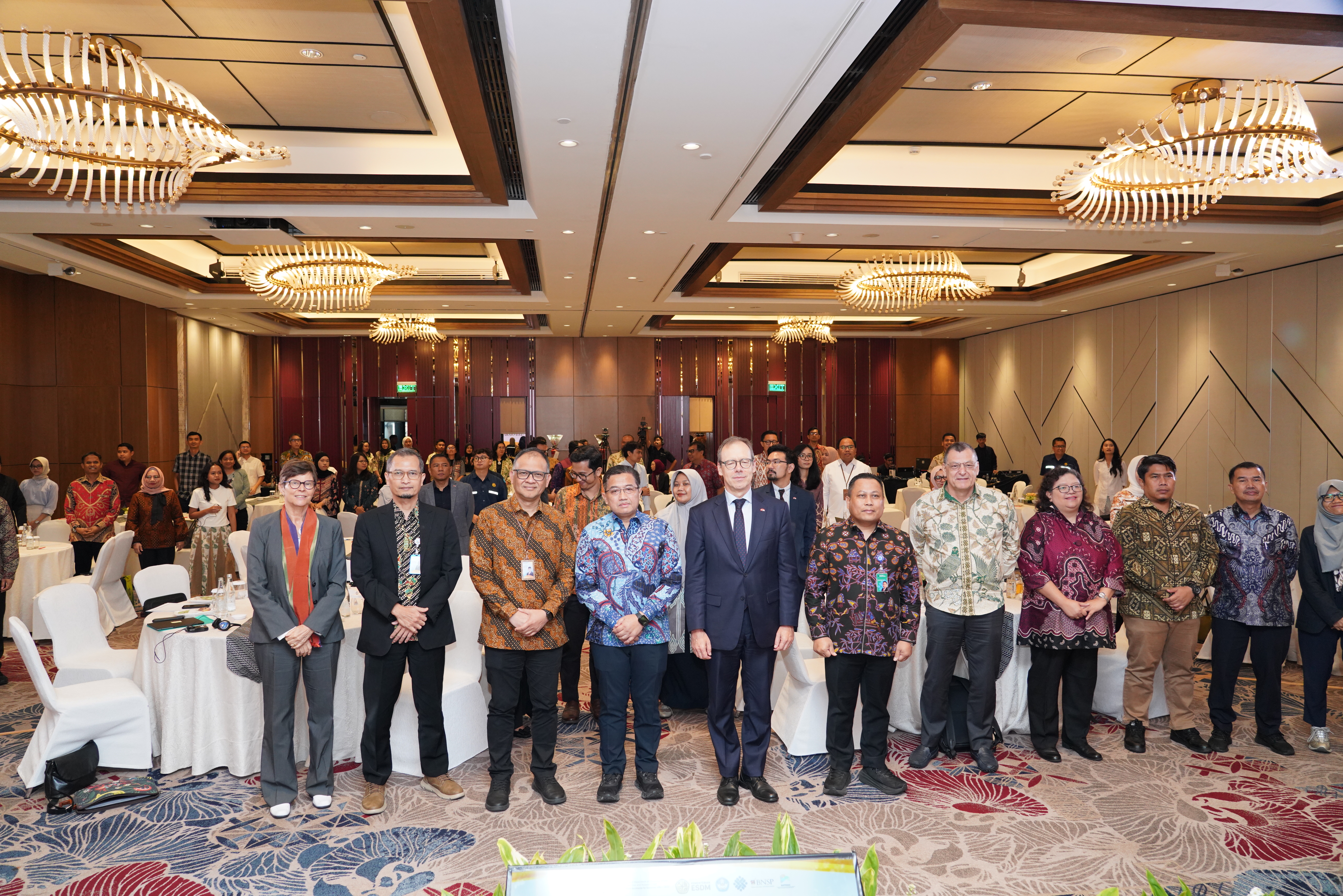
Similarly, Director General of Higher Education, Ministry of Higher Education, Science, and Technology Khairul Munadi stressed that RESD goes beyond curriculum development by building a vocational education system aligned with industry needs and integrating formal and non-formal education in the development of green skills.
From the labor perspective, Director General of Vocational Training and Productivity Development, Ministry of Manpower Darmawansyah, represented by Director of Productivity Development, Ministry of Manpower Muhammad Ali, stated that RESD responds to both emission reduction goals and workforce competency needs by expanding access to vocational training and employment opportunities in the renewable energy sector.
Over the next 3.5 years, RESD Phase 2 will expand to 19 polytechnics and training institutions across 15 provinces under the coordination of the Ministry of Energy and Mineral Resources, the Ministry of Higher Education, Science, and Technology, and the Ministry of Manpower. Key priorities include expanding technology coverage to battery energy storage alongside solar and hydropower, strengthening industry-based curricula, upgrading training facilities to industry standards, and promoting gender equality in renewable energy education and careers.
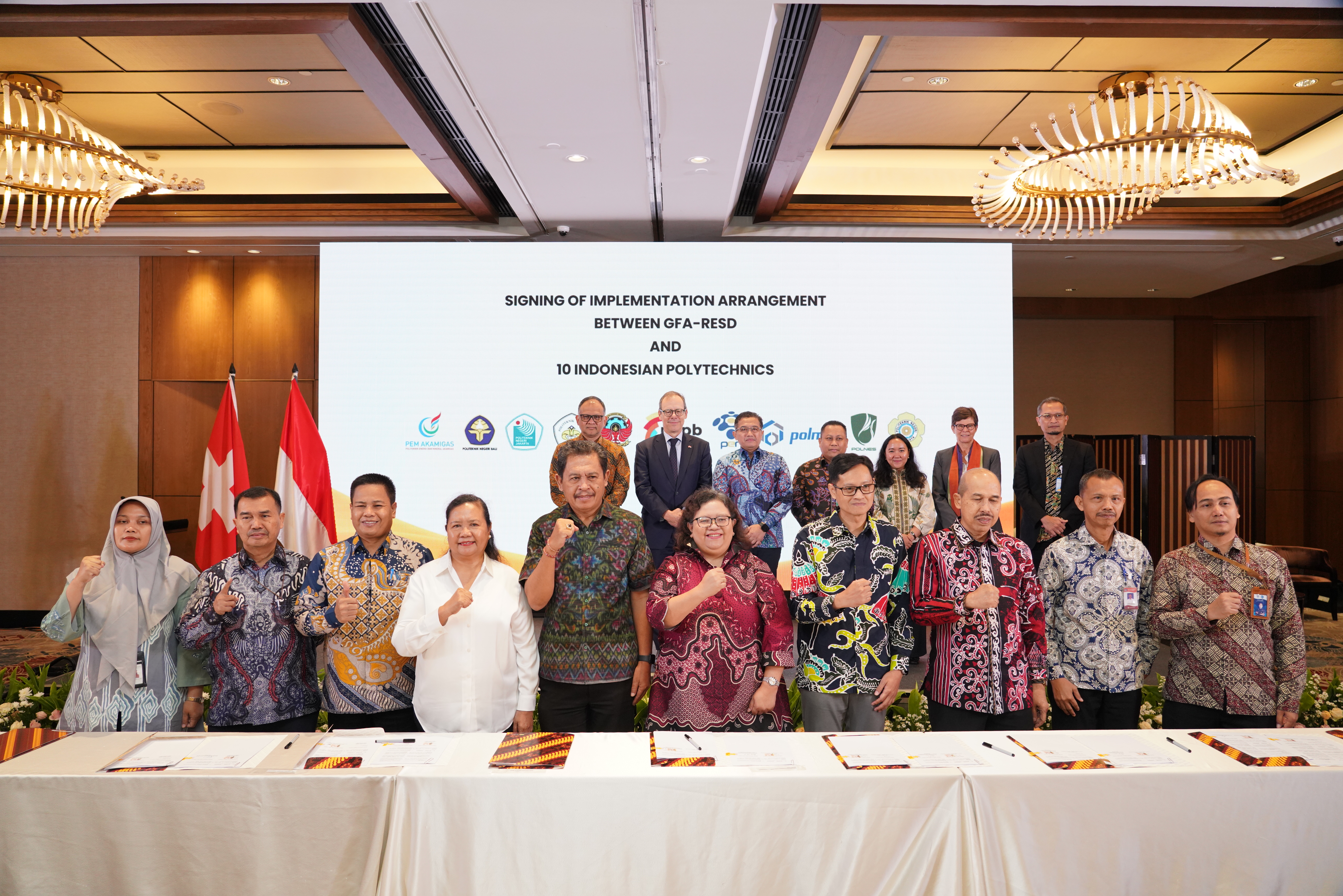
Swiss support includes curriculum development, training for lecturers and instructors by Swiss experts, provision of industry-standard learning facilities, and promotion of gender equality in the renewable energy sector.
Through practice-based learning and close industry engagement, RESD Phase 2 aims to enhance graduate employability while supporting Indonesia’s renewable energy targets and Net Zero Emission 2060, further strengthening Indonesia–Switzerland cooperation in sustainable development.